

How to kill it at your new job- proven strategies for getting ahead in a cutthroat culture

So you recently landed a job that lines up well with your career goals.  You’re feeling confident.  Maybe you already have a great track record of achievement- top SAT scores, a stellar graduating GPA, glowing letters of recommendations from past employers.  Your time to shine has finally arrived!  But after settling into your new role, you realize this new work climate is no easy read.  Communication with your boss or co-workers leaves you feeling unsupported, and you start to worry that taking this job was a mistake.  What should you do?  You’d like to avoid moving on prematurely so your resume stays on track.  The following tips will help you kill it at your new job with some proven coaching strategies, even in a cutthroat culture.

Working with an executive coach is a great way to skillfully steer this situation back in your favor.  One of the first things I ask my clients to do is to describe their personal career vision to me.  Outlining one’s career goals helps to pinpoint the various skills and experiences that are necessary to achieve this vision.  Does this job afford you an opportunity to make these gains?  (In all likelihood yes,which is why you sought out and/or accepted the position in the first place.)  Some jobs require you to change more than others- a process which is often unpredictable and frustrating as you figure out how to succeed there.  An executive coach can help you prepare mentally and strategically for this.  Together you will generate lasting and effective solutions to keep you on your personalized track to success.

giphy (3).gif


Reframe how you’re thinking about the ‘problems’ you’re experiencing at work.  Learn to embrace this job as a purposeful choice you are making for the sake of experience and skill building rather than an oppressive situation that is happening to you.  Remember no one is holding you hostage there.  Ask yourself “Am I ready to adapt to a different way of thinking and operating?”  No one said changing perspectives would feel easy, or that you wouldn’t face major obstacles along the way.  Either stay in the game and take ownership of the experience, or prepare to move on.
giphy.gif
Rise to the occasion: successful leaders search for ways to improve and strengthen themselves in difficult situations, inspiring others to do the same. They are often unflappable and well respected, even in hostile work climates.  That’s what makes them so effective in senior positions and invaluable to a company or organization.
  • What personal strengths do you have that helped you overcome past obstacles?  What did you do to persevere?  Some of my younger, especially gifted and fortunate clients have moved through life with relative ease, so dealing with an uncontrollable work environment can feel especially demoralizing.  Others have come through relative adversity, but realize past coping strategies are no longer sufficient.  If the cultural climate of your new job seems unwelcoming, petty or even combative, you may find yourself avoiding interactions altogether.  I encourage my clients to see this as a chance to learn how to read, respond to and handle a variety of people.  The more versatile and challenging, the more prepared and effective you will be in handling future challenges.
  • Anticipate people’s behavior so you can prepare to respond with efficiency rather than let negative emotions take over.  For example, instead of allowing others’ tardiness to be a constant source of frustration, learn to use this extra time to your advantage by completing simple tasks while you wait, organize your schedule or review to-do lists.  Does your boss constantly place blame on others or set unrealistic goals?  Learn to respond with positivity and an eagerness to improve and support.
  • Aim to view other people’s behavior as a reflection of the setting and their ability to cope with it rather than taking it personally.  Criticism is often a relative opinion.  It doesn’t matter that you were your boss’s favorite employee at your past job.  Learn to view criticism as an opportunity to better understand what others expect instead of getting defensive.
Learn to predict and manage your emotional style so that you are not just reacting, but thoughtfully responding to difficult people and situations with strategy.  You’ve heard some people described as ‘running hot and cold, moody, or unpredictable.’  That’s rarely a good thing in work settings.  Anyone who’s served in a leadership role will tell you that managing difficult people or emotionally charged situations is a necessary part of the job.
 obama
  • You’ll find that working with others is much easier if you are well liked – which means you will be more successful during your time there.  I encourage my clients to step outside their comfort zone and find ways to show interest and demonstrate kindness towards others they might avoid in their personal life.  Almost without exception there will be people we don’t like that we need to work alongside.  Whether or not they are truly reprehensible is irrelevant:  not ‘liking someone’ can quickly erode your working relationships and productivity, and get in the way of your professional goals.  People we don’t even like are not worth that sacrifice!
giphy (1).gif
  • Identify your emotional and social style, and zero in on what tends to trigger you during times of stress.  How can you build upon this style so that you remain better balanced under pressure?  It’s not uncommon for people to become rigid and/or less effective in their emotional style when distressed.  Rational-leaning people who are valued for their even-keel disposition and logical problem solving may become hyper-rational and avoid attending to emotional information even when necessary for resolving conflict.  Emotionally sensitive people who are skilled at reading others and interpreting social climates can become overtly emotional and lose track of logical solutions when overwhelmed.
  • Appreciate your natural interpersonal style and how it affects others, and challenge yourself to practice more versatility in your social interactions.  Soon others will experience you as highly perceptive and effective in your role.  As a general rule of thumb, be patient and observe social patterns before jumping to conclusions, avoid gossip, and express gratitude and appreciation for others whenever possible.
  • Respect other people’s seniority regardless of how effective you deem them to be in their role.  You can always ‘be right’ silently in your own head (but beware of resting bitch face!)  Take care to demonstrate flexibility and supportiveness and pay attention to how problems are resolved among others.
Maintain a safe distance between your work identity and YOU.   You are a multi-faceted person who exists with needs outside of your career.  Take a break, catch your breath.  The learning curve of new jobs can be draining, so self-care is crucial to your long term functioning.
  • Taking care of yourself is easier if you adopt a consistent pattern of paying attention to your needs, even if it’s with small gestures.  Doing so will have a cumulative effect which will allow you to get back in the game with endurance and motivation.  As time passes, you will develop increased resiliency, perseverance, emotional self control, and things will seem more manageable.

giphy (2).gif


  • Remember this job is a finite experience, it’s not forever.  These days it is very respectable to stay in any given position for a year or more before moving on to garner other experiences.
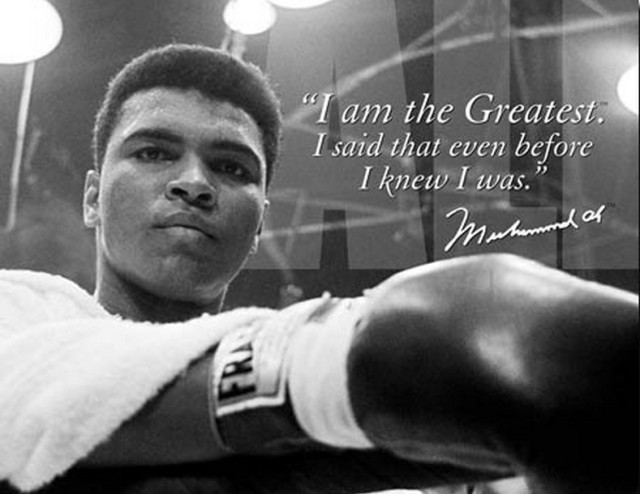
Track and summarize what you are learning and how you are growing as a person, not just for the sake of your career.  No one is going to do this for you.  Check in and swap stories with people outside your place of employment.  Commiserating with others is a good reminder you are not isolated nor the only one going through mine fields.  Only the strong survive!!!
Muhammad-Ali-Quotes-I-am-the-Greatest-Even-Before-I-Knew

Be Better Than Everyone, Use SMART Goals In 5 Easy Steps

Making Your Goals PossibleThe method of SMART goals (an acronym for the 5 steps of specific, measurable, attainable, relevant, and time-based goals) is one of the most effective and powerful tools used by high achievers to reach their goals — realistically and consistently. Whether you’re leading a 300-person organization, a trailblazing startup entrepreneur, or an individual who wants to gain traction towards a personal goal, learning how to set and utilize SMART goals can make the difference between failure and achievement. 1. Make your goal focused and well-defined. A specific goal has a much greater chance of being accomplished than a general goal.

  • When setting your goal, make sure you can answer the 6 “W” questions: Who, What, When, Where, Which, and Why. The more specific a goal is, the more you can find ways of reaching your target.  Ask questions such as:
    • Who is involved?
    • What do I want to accomplish?
    • Where will this happen? Identify a location.
    • When will this happen? Establish a time frame.
    • Which requirements and obstacles will be part of the process? Identify them.
    • Why am I setting this goal? Nail down the specific reasons and benefits of accomplishing this goal.
  • Know the difference between a specific goal and a vague goal. For example, there is a difference between saying, “I work too much, and feel drained and bored with my life” and “I miss having fun in my life, and want to invest time each week to seek out fun/recreational opportunities that will allow me to feel restored and happy.” When you set a goal to invest in reshaping your work/life balance, track your performance at work and other important areas of your life as a way of measuring your progress as you build pleasurable experiences back into your schedule. This will help you see the direct benefit of the changes you’ve made, allowing you to see the payoff of shifting your behavior. Other examples of specific and vague goals:
    • Vague: Get in shape for the summer.
    • Specific: Join a crossfit studio and attend 3-4 times a week over the next 3 months.
    • Vague: Own a home.
    • Specific: Put 30% of income into savings account for the next 12 months and talk to a realtor.

2.  Have identified metrics for measuring your progress and outcomes. A goal without a measurable outcome is like a sports competition without a scoreboard. Identify specific markers of success to measure your progress and build momentum towards your goals.

  • Ask questions such as:
    • How often?
    • How much/how many?
    • How will I know when my goal is accomplished?
    • What is at the finish line?
  • Set a daily reminder to track and measure your progress:
    • Keep a journal, put up a whiteboard at the office, use your smartphone to download a tracking app — these are all tangible ways to track your development.
    • Make the goal Attainable
  • Draft realistic goals. Based on the present restrictions such as your schedule, workload, and knowledge, do you believe you can attain the objective you set? If not, then set a different goal, one that is attainable for you in the present.
  • Ask yourself the following questions:
    • Are you prepared to make the commitment to reach your target?
    • Are you willing to dramatically alter or at least tweak aspects your life?
    • Is there a more achievable target you are willing to to work for?

3. Choose goals that are attainable. Is your goal a challenge but still possible to achieve? Goals should be achievable. The best goals require you to stretch a bit to achieve them but they are not impossible to achieve. Goals that may have seemed far away and out of reach eventually move closer and become attainable, not because your goals shrink, but because you grow and expand to match them. When you list your goals you build your self-image. You see yourself as worthy of these goals, and seek out experiences that allow you to develop the skills and work ethic that allow you to possess them.

4. Make the goal relevant to your life’s reality. For instance, if joining a certain social organization seems like a good idea, but most of the organization’s activities center around consuming alcohol which is inconsistent with your goal of cutting back your drinking, choose a different organization.  Lack of options/choices is rarely a problem in today’s culture of endless options.  Carefully consider how well your choices are fitting into the big picture of how you want your life to look.

  • Set goals that are realistic. If you are 30 pounds overweight and haven’t trained for a challenging athletic endeavor in 5 years, it’s unrealistic not to mention physically risky to sign up for a triathlon with 6 weeks of training. So set a goal you have a realistic chance of achieving.  Even if someone is motivated and capable of change, their expectation of immediate progress/payoff may be unrealistic, and can lead to a sense of inadequacy and undermine their confidence when moving forward.

5. Ground the goal within a time frame.  SMART goals should be time-bound, meaning they should have a deadline or there should be a date for completion. Setting a deadline reinforces the seriousness of the goal in your mind. It motivates you to take action. When you don’t set a timeline, there is no internal pressure to accomplish the goal, so it gets put in the back burner.  Have a sense of urgency. If you want to raise your credit score to 720, when do you want to raise it by? “Someday” won’t work. But if you anchor it within a timeframe (example: Raise credit from 700 to 720 in 12-18 months), then you’ve set your mind into motion to begin working on the goal.  Within your established time frame, ask yourself:

  • What can I do TODAY to reach my goal?
  • What can I do 3 weeks from now to reach my goal?
  • What can I do 3 months from now to reach my goal?

FINAL TIPS:

  • Document or share your milestones with supportive people in your life along the way to your target. Make a point to pair your milestones with healthy rewards.
  • Remember, there will be days when you become discouraged and ‘not in the mood’ to work towards your goal(s).  This is normal, and does NOT mean you are failing yourself, or your plan.  Getting offtrack does not equal failure, and is not a reason to give up or relent to feelings of hopelessness.  Hit the pause button and take a breather.  High achieving, hard working people still need a break sometimes.  But then get your mind and body back on track, and reconnect with the true purpose behind setting your goal in the first place.  Why is it important to you?  What will accomplishing it afford you in the long run?  Then get back in the game.
  • Don’t forget to enlist people, opportunities and a range of resources that can help you achieve your goal.  Most people feel good about tapping into their strengths, skill sets, and networks to help others grow and achieve.  Help them feel good about helping you by not only expressing your gratitude, but by showing them the positive evidence of their support.
  • Use the power of visualization. Make sure to imagine yourself not JUST at the finish line of your goal(s), but visualize yourself achieving the small steps it takes to get there.  Don’t let there be a huge abyss between where you are now and where you want to be in your fantasies.  Yes it can be indulgent and fun to fantasize about ‘the ultimate fantasy’ coming true, but you’ll benefit more from fantasizing about hitting your goal for the week if it’s actually achievable in the here and now.