You Can See Everything: Elizabeth Holmes, Self-Awareness, and the Psychology of Trust

The Film

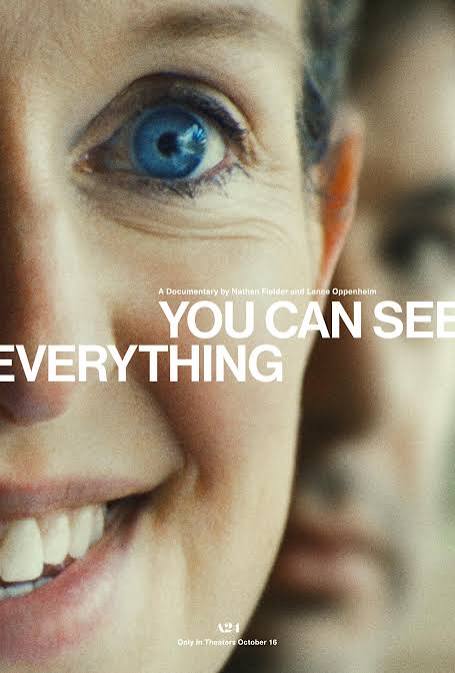
You Can See Everything, the A24 documentary from Nathan Fielder (Nathan for You, The Rehearsal) and Lance Oppenheim, follows Theranos founder Elizabeth Holmes through her last 34 days before reporting to federal prison in May 2023, filmed at home with her partner, hotel heir Billy Evans, and their two children. Fielder isn’t trying to relitigate her case. He wants to understand who Holmes really is, and when that proves elusive, he and Oppenheim make that difficulty the film’s central theme. By his own account, he ended with less certainty about her than when he began. The result is uncomfortable to watch, revealing both the hubris and the humanity of Holmes in her final days of freedom. Rather than draw conclusions about her inner life, the filmmakers leave viewers to sit with their own questions and decide for themselves. Many arrive with firm opinions of who Holmes is and leave with lingering questions about what is actually true: her motives, her integrity, and the influence of her intimate relationships.

Why I Am Writing About It

I’m writing about this film because so many friends and clients have asked for my take on it. They know my unique background: I hold a doctorate in clinical psychology, have practiced and taught psychological assessment in the past, and now work as an executive coach to tech founders and organizational leaders. My coaching work across the tech ecosystem has given me a close view of how brilliance, ambition, and blind spots coexist in the people who build and run companies.

I am also fascinated by how filmmakers use clinical ideas, knowingly or not. Fielder’s interviewing borrows from the logic of the assessment room: he probes her overly favorable self-presentation, examines the gap between Holmes’s scientific intelligence, social judgment, and verbal understanding, and explores her reliance on the men she trusts. Because the film brings attention to material that might lead people to draw hard conclusions about Holmes, this article aims to explain scientific concepts that underlie some of the questions being explored, specifically through the MMPI’s L scale, uneven cognitive abilities, folie à deux, and Dependent Personality Disorder.

Running through all of these concepts is a theme I return to constantly in my coaching work: self-awareness. In clinical language, it is often referred to as insight, the capacity to see ourselves accurately, including how we come across to others. Each section that follows touches a different facet of it.

The Boston Globe invited three psychologists to watch it. TODAY asked a clinical psychologist who studies facial cues why Holmes is so hard to read, and NPR’s Short Wave used the film to explore what behavior can and can’t reveal about deception. Critics are circling the same questions: The Ringer has written about the film’s “contagious delusion” and Holmes’s utmost conviction, and Resident called her a founder who may not believe she failed. What I hope to add is a closer look at the clinical concepts the film brings to mind.

To be clear: None of the diagnoses discussed here are my professional opinion of Elizabeth Holmes, Billy Evans, or Sunny Balwani. Psychologists and others with psychological training are held to a professional standard of not offering diagnostic opinions about people they have not personally evaluated (often called the Goldwater Rule), and a documentary is an edited work whose subject knew the cameras were rolling. These diagnoses are worth understanding because the film invites questions about them, and my aim is to clarify the difference between what a film might suggest and what a diagnosis requires.

“I Have Never Told a Lie”: The L Scale and Faking Good

Holmes tells Fielder she cannot recall ever telling a lie, not even a white lie, and speculates that if she ever did, it might have been in childhood. In psychological assessments, the L (Lie) scale of the Minnesota Multiphasic Personality Inventory (MMPI-2) is designed to examine a person’s relationship with honesty. One of the most widely used and researched personality assessments in psychology, the MMPI helps clinicians identify psychological conditions and personality patterns in clinical, forensic, and occupational settings, from treatment planning to court evaluations to screening candidates for high-stakes jobs.

What it measures. The L scale’s 15 items describe small, ordinary failings, like occasionally bending the truth or losing one’s temper, that almost everyone admits to. Denying many of them raises the score, suggesting an attempt to look unrealistically virtuous, or “faking good.”

Why it signals low psychological sophistication. The L scale catches a naive defensiveness. Its companion, the K scale, picks up subtler self-protection and tends to rise with education and psychological-mindedness. A sophisticated person who wants to look good knows that claiming perfection isn’t believable, so they admit to small flaws. An elevated L means the person didn’t make that calculation and has limited insight into how they come across.

Fielder lets Holmes’s claim stand, and given everything the public already knows about Theranos, it undermines itself. Viewers don’t conclude she’s honest; they wonder whether she knows how it sounds. That gap in insight is the clinical point. However, an elevated L score is not proof of lying. It can also rise in people with very traditional or religious upbringings, and in high-stakes settings where looking good matters tremendously. That describes Holmes’s situation: after years of legal scrutiny, she is weeks from prison, insisting that “you can see everything.”

Organizational psychologist Tasha Eurich offers a useful way to think about this. Her research distinguishes internal self-awareness from external self-awareness: how clearly we understand ourselves, versus how clearly we understand the way others see us. Surprisingly, the two are largely unrelated. A person can feel deeply certain of who they are while badly misjudging how they are perceived. The L scale, and much of what Fielder captures on camera, speaks to external self-awareness, and that is where Holmes seems to struggle most.

A Discrepant Cognitive Profile: Scientific Brilliance vs. Verbal Comprehension

Holmes’s intellect has long been central to her public story. Celebrated as the brilliant Stanford chemical engineering student who founded Theranos at 19 and dropped out to run it, she was hailed as the next Steve Jobs and named by Forbes the youngest self-made female billionaire. The film doesn’t dispute that reputation: Fielder makes clear she is fluent in scientific subjects he admits are far beyond him. He pairs that with a scene in which she cannot grasp Abbott and Costello’s classic comedy routine “Who’s on First?” even when he asks her to explain why it’s funny. The routine depends on names that double as questions, so getting it requires holding two meanings at once, drawing on cognitive flexibility, pragmatic language comprehension, and theory of mind.

In cognitive assessment, tests like the Wechsler Adult Intelligence Scale (WAIS) measure verbal comprehension separately from other reasoning abilities, and it is not unusual to see large discrepancies between them, such as superior technical reasoning alongside weaker verbal and social judgment. Because people tend to read strength in one area as competence in all of them, those discrepancies might go unnoticed by the investors and boards evaluating a founder. In assessment, the question becomes: does this person have the capacity to fulfill their own expectations, or do they tend to overestimate their abilities? Fielder seems to suggest that Holmes struggles to decipher verbal and social nuance as quickly or readily as one would expect from someone of her intelligence. That gap shows up both in the comedy routine and in her failure to anticipate how a far-fetched claim of absolute honesty will land. Is Fielder asking viewers to connect this reduced comprehension to her downfall? But one edited scene is an illustration, not a measurement, and no firm conclusions should be drawn about Holmes’s cognitive abilities. She is also likely sleep-deprived from nursing a newborn while caring for a toddler, and emotionally exhausted by her impending imprisonment, all of which could easily reduce her ability to catch on to the skit’s humor.

Folie à Deux: “Madness for Two”

Folie à deux (“madness for two”) is a rare syndrome, formally shared psychotic disorder, in which delusional beliefs pass from one person to another within a close, often socially isolated relationship. Typically a dominant primary person holds the belief and a more dependent secondary person adopts it; when the two are separated, the secondary’s beliefs often fade. The DSM-5 no longer lists it separately, classifying such cases under Other Specified Schizophrenia Spectrum and Other Psychotic Disorder.

Nothing in the film suggests the broader picture of psychosis, such as hallucinations or disorganized thinking. But Fielder repeatedly shows the relational structure the syndrome describes:

  • Speed and intensity: both describe a bond that became all-encompassing almost immediately, with few if any boundaries and seemingly unlimited trust.
  • A closed loop: a shared story of being grossly misunderstood and a mutual desire to change how others see her, reinforced by each partner and closed to outside challenge.
  • Merged identities: Holmes granted Evans power of attorney before entering prison, and the film shows him posting as her on X. Fielder and Seyfried both voice concern about how much of Holmes’s public voice and image now runs through him.
  • A shared grand plan: the film shows both planning a “Theranos 2.0,” an even more ambitious health biotech company. (Evans’s diagnostics startup, Haemanthus, has publicly said Holmes has no role in it.)

Evans’s own words reinforce this closed loop. Asked whether Holmes is good at protecting herself, he admits she is not. Asked whether he has ever suspected her of lying, he answers, “No. Never.” When Fielder asks what it is like when they argue, Evans says they never fight, acknowledging this might be hard to believe. Together, these absolute claims echo the L-scale pattern, applied to a couple. Healthy couples do argue; John Gottman’s research shows that what predicts a lasting relationship is how partners repair after conflict, not whether it happens. A report of no conflict usually signals avoidance, one partner routinely giving in, or a relationship so idealized that conflict can’t be acknowledged.

Underneath all of this is Holmes’s own conviction. Throughout the film, she makes clear that she still believes the Theranos technology worked, despite the outcome of her case. Clinically, a delusion is a fixed belief that persists despite clear contrary evidence, and her certainty, as depicted in the film, has that quality. A delusion can exist without a broader psychotic illness, as in delusional disorder, where people otherwise function well. Delusional thinking can also be associated with a personality disorder, in the form of rigid, grandiose, or self-protective beliefs. There are non-clinical explanations, too: denial, motivated reasoning in someone whose identity was built on a once-heralded invention, or the limits of self-awareness that make it hard to see what is obvious to others. Whatever its source, that shared belief appears to underpin the couple’s discussions of a new venture.

The film leaves open who the inducer is: Holmes, with Evans as devoted carrier, or Evans, in whom she has placed so much trust while incarcerated. The lens is useful because it makes the relationship, not either person, the unit of analysis.

Dependent Personality Disorder: Patterns in Her Partnerships

Dependent Personality Disorder (DPD) is a pervasive, excessive need to be taken care of, leading to submissive, clinging behavior and fear of separation, beginning by early adulthood. The DSM-5-TR requires at least five of eight features: difficulty making everyday decisions without excessive reassurance; needing others to take responsibility for major areas of life; difficulty expressing disagreement; difficulty starting projects independently; going to excessive lengths for nurturance; discomfort when alone; urgently seeking a new relationship when one ends; and preoccupation with fears of being left to fend for oneself. Diagnosis requires a clinical interview, history, and a pattern that is stable over time rather than explained by circumstances such as incarceration.

Several patterns in the film may resemble DPD features:

  • Handing over major life domains. Balwani once ran Theranos operations alongside her. In the film, Fielder and actress Amanda Seyfried (who played Holmes in The Dropout) both express concern about how much trust and control Holmes has given Evans while she is incarcerated. When Fielder presses her on Evans’s deals, including his later-dropped bid for a share of the documentary’s profits, she answers that money is “not my thing.” That stance lets her hand off financial responsibility without examining it, and, like never lying and never fighting, it denies a motive nearly everyone has.
  • Moving from one dominant partner to the next. The film traces a series of close relationships with men Holmes has trusted almost completely: first her father, who in the film expresses paternal pride and protection; then Balwani, who looked past a nearly 20-year age gap to partner with her both romantically and professionally; and now Evans. Each of these men, moved by her for his own reasons, goes to great lengths to protect her. This is a common pattern in dependency: reliance on others tends to draw caretaking out of the people around them.
  • Not disagreeing. At her 2021 trial, she testified that she deferred to Balwani, and that he had been controlling and abusive, which he denied. Evans’s “we don’t fight” may reflect the same pattern, but it is his description of the couple, not hers.
  • Poor self-protection. Evans’s admission that she isn’t good at protecting herself fits the DPD tendency to give up self-advocacy to keep a relationship secure. It echoes her defense at trial, which argued that she relied on Balwani for lab operations and finances. Whatever the jury concluded, her own account is a story of handing responsibility to a trusted partner and not protecting herself from the outcome.

The strongest counterevidence is her career. Founding a company at 19 and running it as CEO for over a decade is hard to square with difficulty starting projects independently. A more cautious description is dependent traits within romantic relationships: a fiercely independent public self paired with a highly reliant private one, a common pattern that is not the same as a personality disorder.

The Pull to Protect: Fielder, Seyfried, and Holmes

One of the film’s most interesting threads is how the people trying to understand Holmes keep being pulled toward her. At times, the film brings Fielder into excruciating closeness with Holmes: he is present as she, Evans, and their newborn share caresses, he makes a point to ask them if he is interfering with their final opportunity for sex before her imprisonment, and he goes to great lengths to protect her from being kept in the dark about decisions Evans makes on her behalf while she is in prison. Holmes invites this closeness, too, urging him to test his discomfort with cold water by sharing one of her favorite sensory experiences: the expansive, bracing freedom of swimming in the open sea. He hesitates at first, but later reveals that he took her up on it, and the two appear joyful and connected in the water despite his stated reluctance. Throughout the film, he seems unsure how to understand his connection to her, and he goes through a romantic breakup of his own during filming.

Seyfried gently asks Fielder whether he is struggling with an urge to protect Holmes, and whether his feelings might interfere with how he tells her story. He immediately denies he’d let his feelings obstruct the truth, but viewers are left wondering what to make of his real feelings about her. Seyfried herself is sympathetic to the idea that Holmes has been exploited by the men in her life, yet steadfast in her desire to give an honest depiction of Holmes, while acknowledging that any actor’s portrayal inevitably assigns some intent. Both Fielder and Seyfried seem to want to protect Holmes from Evans, and in doing so, they implicitly assume she is unable or unwilling to protect herself.

In clinical work, there is a name for this: countertransference, the feelings a client, or in this case, a cinematic subject, stirs up in the person trying to understand them. Clinicians are trained to notice these feelings because, left unexamined, they can skew what we see and how we respond. Fielder’s and Seyfried’s vacillation, from skepticism to closeness and back again, is part of what makes the film feel so honest. It also echoes a pattern discussed above: Holmes seems to draw protectiveness from nearly everyone who gets close to her.

What the Film Leaves Us With

Fielder offers no tidy conclusion, and I think that’s the point. He shows a woman with brilliant technical reasoning who seems at times to struggle with nuance most of us take for granted, and who has repeatedly placed full trust in the people closest to her. But You Can See Everything also shows an emotional postpartum mother facing separation from her two young children, and a person whose blind spots may have left her far more exposed than she realized. None of this erases her accountability. It does make her more recognizable as someone whose fall from grace is painfully human.

What can we learn from it? First, that intelligence and self-awareness are different capacities. Brilliance in one domain can coexist with real difficulty seeing how we come across and judging the true limits of our own capacities, and the people around a gifted founder, from investors to boards, can easily mistake one for the other. Holmes’s story is a cautionary tale: even the most brilliant creators cannot be assumed to exercise clear judgment when their self-awareness is limited. Second, that trust without boundaries carries risk, both for the person who extends it and for those who feel drawn to protect them. And third, as Eurich’s research suggests, experience and power tend to erode self-awareness, which is why it can be hardest to maintain for the very founders who have achieved the most. In my work with founders, I see versions of this tension often: real gifts alongside real blind spots, and a deep need to trust others during life’s hardest moments.

For investors, boards, and anyone else with skin in the game, the practical lesson is to seek better information about the people entrusted with decision-making power, ideally gathered with the leader’s consent by independent, third-party evaluators:

  • Use multi-rater (360-degree) assessment. Comparing a leader’s self-ratings with how colleagues, direct reports, mentors, and board members rate them reveals whether the leader’s self-view is accurate. Leadership research has found that “overestimators,” who rate themselves well above how others see them, tend to fare worse than leaders whose self-assessments match others’ views.
  • Protect the integrity of the process. As an executive coach, I have conducted hundreds of 360-degree assessments, and I can attest both to their value and to the challenge of maintaining their integrity. Rater confidentiality is difficult to guarantee, especially on small teams and boards, and raters who fear retribution or worry about being singled out as a circumstantial outlier may soften their ratings. This is where independent, third-party administration matters most.
  • Include validated personality and derailer measures. Tools such as the Hogan Development Survey identify traits like overconfidence and an inflated sense of competence that can fuel early success before becoming liabilities.
  • Verify claims independently. A founder’s confidence is not evidence. Technical and scientific claims should be reviewed by qualified outside experts with no stake in the outcome.
  • Reassess over time. Because experience and power tend to erode self-awareness, a single evaluation at the start is not enough; the most successful leaders still need regular, honest feedback.

And that may be the film’s final irony. For a documentary titled You Can See Everything, what a closer look ultimately reveals is how much we cannot see. The psychological testing, history, and clinical context needed to truly understand how Holmes functions are simply not available to us. What we see on screen invites questions; it cannot answer them. If there’s one takeaway I can leave you with, it’s this: we can never see everything. The danger lies in believing, and acting as though, we can. Hope for the best, but work to create a future that safeguards against the worst.


Sources and further reading: A24; American Psychiatric Association, DSM-5-TR; Butcher et al., MMPI-2 Manual; Lasègue & Falret (1877); Boston Globe, “We invited three psychologists to watch ‘You Can See Everything'”; TODAY, “I’m a therapist trained to read facial cues”; The Ringer, “The Contagious Delusion of ‘You Can See Everything'”; The Ringer, “The Utmost Conviction of Elizabeth Holmes”; Resident, “Elizabeth Holmes: The Woman Who Refuses to Believe She Failed”; Katie Couric Media, “Elizabeth Holmes Has One More Thing To Sell: Herself”; NBC, “Elizabeth Holmes’ partner, Billy Evans, speaks out following the release of ‘You Can See Everything'”; TheWrap, “Amanda Seyfried Says She Became a ‘Billy Detective'”; IndieWire, “Amanda Seyfried Is Still No Closer to Who Elizabeth Holmes Really Is”; Chamorro-Premuzic, “Could Your Personality Derail Your Career?” Harvard Business Review; Hogan Assessments, Bold scale; Fleenor et al. (2010), “Self-Other Rating Agreement in Leadership: A Review,” The Leadership Quarterly; Eurich, “What Self-Awareness Really Is (and How to Cultivate It),” Harvard Business Review; The Gottman Institute; StatPearls, “Shared Psychotic Disorder”; PubMed, review of Dependent Personality Disorder; American Journal of Psychotherapy, on countertransference; American Psychiatric Association, “The Goldwater Rule”; Britannica, “Elizabeth Holmes”; NPR, “Elizabeth Holmes Testifies About Alleged Sexual and Emotional Abuse at Fraud Trial”; Industrial and Organizational Psychology, “Performance Appraisal: Feedback”; NPR, Short Wave; and reporting from the Associated Press, NPR, Variety, Inverse, Fortune, The Daily Beast, and Law Commentary.


Navigating an existential crisis in tech: tips from a Silicon Valley executive coach

The emergence of the darker side of A.I. the downturned economy, mass layoffs, and most recently the collapse of Silicon Valley Bank have made the past few weeks especially tumultuous for those working in the tech sector. For over a decade, my work as an executive coach in Silicon Valley has given me visibility into the sorts of quandaries tech leaders face while building products that transform the world in unpredictable ways. Many are facing a new sort of existential stress, as they work to find a way to reconcile how their professional contributions could pose a serious threat to the future of humanity. 

The current mood across the tech ecosystem has shifted away from a once devil-may-care attitude, notably among millennials raised on a diet of ‘move fast and break things’. The Bay Area, known for its youth-forward social climate is widely considered the country’s pulse of progress and tech innovation. My coaching work throughout the tech boom era entailed helping tech workers prepare for eventual burnout, since most were happy to immerse themselves in work with little to no separation of their social lives, only stopping to refuel their mission-driven ideologies with annual trips to Burning Man. 

The whiplash of recent events in 2023 following the erosive damage caused by the pandemic has led to a jarring new kind of existential stress among the tech crowd. The encroachment of A.I. tools rendering careers obsolete at breakneck speed, the sterilization of creative industries, and evidence that A.I. operates with racially biased, sexist and morally unethical practices has many people deeply fearing what the future holds. 

What exactly is ‘existential stress’ and how does someone manage an existential crisis?

Existential stress occurs as a result of inner conflicting feelings that lead someone to question the meaning and purpose of their life. When we face personally important questions that aren’t easily resolved, we can end up feeling stuck and unsure of how to move forward. This leads to feeling deeply uneasy when we no longer feel rooted in the values and principles that once led our purpose and direction in life. Existential stress may be experienced as a crisis when once effective strategies for managing stress are no longer sufficient and our overall functioning wanes.

If you or someone you know is feeling this way and wondering what to do, here are key signs that you may be experiencing an existential crisis:

Chronic worry. You may be experiencing recurring worries and unsettling fears that you are no longer able to get past, and distract you repeatedly in your daily life.

Loss of motivation. You may be easily overwhelmed or lose direction doing tasks you once completed with effort, and feel a loss of desire or drive that once fueled your work ethic. You may feel disconnected to the purpose of meaningful tasks, which may leave you feeling like ‘you’ll never catch up.’ 

Low energy. You’ve fallen out of your normal sleep, exercise, and diet routines that historically sustained you, leading to an erosion of your baseline energy. 

Loss of social appetite. You may have less interest in spending time with others you once enjoyed connecting with, due to low energy and mood. With diminished social interactions, we are less apt to consider alternative perspectives and benefit from the restorative nature of social connection. 

Loss of control. You may feel a lack of control over the future and feel like you can no longer prevent bad things from happening. This can lead to feelings of helplessness, as though your efforts are pointless and/or meaningless.

Anxiety or depression. While it’s normal to experience a range of emotional highs and lows throughout one’s life, you may find yourself struggling with mood symptoms that have reached clinical levels.
Substance abuse and/or self-sabotaging behaviors. You may find yourself relying on substances to avoid thinking or feeling, or falling into habits that are personally harmful as a temporary distraction from feeling lost. 

Seek professional help first. It can be difficult to know where to start when stress levels rise, making it difficult to add anything new to your life. Make time to check in with your primary care physician, share with them any changes you are experiencing in your physical and mental health, as well as any history of diagnoses, and take their advice if they recommend seeing a mental health professional. Adopting the appropriate level of support is the most important step in moving forward successfully, and may require an interdisciplinary approach.

Initiate changing your current pattern.  Newton’s first law of motion states that “every object will remain at rest or in uniform motion unless compelled to change its state by the action of an external force.” The tendency to resist change can put us in a state of inertia. The less physically active we are, the harder it is to move, leading to a cycle of diminishing energy. Adopt healthy sleep and diet habits as a priority, because it can determine your mental health in the same way many other variables do.

Reach out to others. Seeking support from friends and family is crucial when facing existential stress. While it may help to spend time alone to process your feelings, it’s important to not remain isolated for too long. Try seeking out new social opportunities, listen to how others are managing similar stressors. Connecting with others can normalize our experiences and help reduce feelings of isolation.

Practice self-expression. Pent up emotions can rob us of vital energy and focus. Find ways to process and express what you’re going through. Seek out opportunities that allow you to be creative, connect with your inner experience, and process it through writing, artwork, or any simple, routine task that soothes you.

Practice gratitude. When we experience ongoing stress, everything begins to blur together and falls under a negative light. Build the habit of noticing what you normally ignore, and have learned to take for granted. Look outside of your bubble, beyond your station in life as a reminder of how much you can appreciate about your current existence.

Focus on what you can control. Feeling a newfound loss of control is a core part of existential stress. Focus on what you can control to ground yourself in reality.  Remind yourself there will always be elements of life you can’t control, let alone predict. Fixating on those things reduces our ability to pay attention to the parts of our life we can influence with forethought and effort.

Practice mindfulness and meditation. Developing a restorative mindfulness practice like meditation can open a gateway to much needed relaxation. Giving yourself this mental ‘downtime’ works to restore mental agility and improves your ability to respond to stressors. 

Redefine your life’s purpose. Our existential concerns are often born out of feeling a loss of direction, leading to fears that we’re no longer on the right path. Take time to revisit your values, and if necessary develop new strategies for decision-making. It’s a good reminder we never stop changing, so our habits may need updating if we are to remain focused on what’s most important to us.

Identify Tech Leader Burnout And Thrive Post-Pandemic

Repost of article originally written for Forbes Coaches Counsel and published here

Exhausted businessman sitting at desk in office at night

The tech ecosystem is now seeing the deleterious, cumulative effect of the pandemic upon employee performance, health and well-being. Virtually no aspect of how people live and work has gone unscathed. Those who’ve managed to avoid job losses are encountering unprecedented levels of pressure and stress in work climates rife with pandemic-related organizational disruptions. Even those who’ve financially benefited from a tech industry windfall may suffer identity confusion and social disconnection in light of the changes that significant monetary gains can bring. After over a year of living under the influence of a pandemic, many have lost sight of how to recognize the signs and symptoms of burnout, enlist appropriate professional care in support of health and well-being and prioritize self-care.

While working as an executive leadership coach and corporate trainer over the past year, I’ve witnessed expansive upheaval across my tech clients’ lives. I’ve seen young, once-healthy people develop repetitive stress injuries and chronic pain, and a stress-related stroke that halted a founder’s hyper-growth startup. In other cases, once highly driven individuals abandon high-pressure roles to live scaled-down lifestyles abroad in third-world countries, finally finding time to attend virtual 12-step meetings for substance addiction. When some came into substantial financial gain following an acquisition or IPO, they grappled with the strain it caused, disrupting relationships and dismantling structure in their lives. While these may be some of the more extreme cases, people need not wait to experience life-altering consequences before addressing burnout and taking steps to regain and protect their health and wellness. 

Recognize The Signs And Symptoms Of Burnout

Generally optimistic about career fit and progression, motivated to contribute to individual and group objectives, capable of estimating scope of work, consistent performance in the general functions of your role, recognizing growth in self and others, engaging in mentorship, positively contributing to work culture, investing in communicating up and down and across levels of organizational seniority, able to return to prior functioning subsequent to setbacks, enlisting others for support when needed. Generally able to maintain healthy eating/sleeping/exercise practices; enjoying recreational activities and engaging in fulfilling personal relationships.

Surviving Burnout

Easily irritated by everyday work demands, recurring fear of failure in self and/or others’ performance, frequently overwhelmed by tasks that were once manageable, diminished concentration for routine operations, inadequate energy for learning or spearheading new objectives, habitual lateness and/or absenteeism in the general functions of your role, avoiding openly communicating, struggling to offer or receive constructive feedback or support from others, uncertain about professional next steps, decreased attention, increased effort or inability to maintain healthy eating/sleeping/exercise habits, difficulty maintaining personal relationships, chronic feelings of guilt over missed social engagements and reduced ability to enjoy recreational activities.

In Crisis

No longer able to perform in expected capacities of your role, chronically withdrawn, overwhelmed, exhausted, irritable, hypervigilant and/or paranoid without cause, anxious and/or sad with uncontrollable worry, frequently tearful or angry, preoccupied with personal ineffectiveness, cynical or hostile attitude, detached or withdrawn from professional and personal relationships, incommunicative, erratic mood swings, loss of identity in one or more major area of life, thoughts of self-harm or harm to others. Chronically disturbed eating/sleeping habits, reliance and/or abuse of alcohol or recreational substances to manage mood, stress-related physical symptoms coupled with resistance to seeking medical/professional attention and/or adopting changes made in treatment recommendations. Disconnected or severed interpersonal relationships and social isolation; experiencing apathy toward previously enjoyed recreational activities.

Enlist Appropriate Professional Care In Support Of Health And Wellness

Whenever someone is surviving burnout or in crisis, it is critical to seek out immediate medical attention and enlist appropriate levels of professional support. Obtain assessments from primary care physicians, medical specialists and licensed mental health professionals in your area with the capacity for ongoing treatment. Without adopting well-suited levels of assessment and treatment from trained experts, the risk of serious health failure and damage to one’s professional track record runs high. The hallmark features of burnout and ensuing health consequences, and the bigger implications these may have on everyday life, must take priority. 

Prioritize Self-Care And Thrive

Once health and wellness have returned to baseline, consider investing in executive and/or personal coaching to implement a curated self-care and professional development plan that reflects your life vision, priorities and values (registration required).

Determine how the mindsets and motivational tools, relationships, health habits and social structures in your life contribute to and deter from your goals. With health and career sustainability in mind, consider how to optimize your strengths and existing skill set, identify potential avenues for growth and learning in order to thrive and build alignment across all areas of your life. Determine if your organization provides a learning and development budget for you and consider how to best utilize it as a resource to support your plans. Connect with employee resource groups (ERGs) for additional support and mentorship as well as professional communities in your industry.

Lastly, keep a close pulse on your day-to-day mindset, and pay attention to the choices and patterns that either sustain you or drain you of energy. Thriving takes effort to maintain, so be sure you are enlisting the right level of support and resources.


What’s Your Story? Podcast

It was a tremendous honor to share my personal and professional journey into executive coaching on the podcast What’s your Story? Growing up Mexican American in small town, rural Oregon I had a deep curiosity about other places and cultures outside of my own. That curiosity, paired with the support of others fueled a professional evolution filled with fascinating, challenging and rewarding experiences across psychology and executive leadership coaching. Our stories matter; representation of achievement by women of color encourages the next generation to see themselves as leaders. Find the full podcast on Spotify here.

whats-your-story-0JpebRjV4iF-KvTQtDmWx2H.1400x1400

Silicon Valley coach shares the secret to sustaining personal change in 2020.

When January hits, particularly in the dawn of a new decade, many of us take inventory of the changes we’d like to implement in the coming era. Others are wary of making grand proclamations in the way of ‘new year’s resolutions’ in light of well known research that proves 80% of people fail to keep their New Years’ resolutions, with most people giving up on their goals as early as January 12. Yikes!

giphy

The reason most people fail to keep up with resolutions is because they set vague goals like “make healthier choices” or try to overhaul their life too quickly with changes. Psychologists agree that goal setting is most effective when people create concrete, small changes that build over time. Further, research has shown that people who are internally motivated are more likely to invest time in maintaining change with more success, than people who rely on external motivators to sustain change. When we expect specific outcomes as a result of our hard-earned changes that aren’t entirely in our control (such as landing a promotion or new role, improved mood, relationships or physical transformations) we can easily slide back into old habits rather than maintain change.

Many of Silicon Valley’s top leaders utilize executive coaching as a powerful resource for building and sustaining change for their professional and personal growth. One effective tactic for identifying and sustaining change I use as an executive coach draws from the toolbox of one of tech’s biggest successes- Marc Benioff, Co-founder and CEO of Salesforce.  He developed the V2MOM template for setting annual goals across the organization, creating a new V2MOM and sharing it with the entire company, asking every employee to create and publish their own annual V2MOM plan. Simply put, the V2MOM is a framework for identifying the vision, values, methodology, obstacles and measures for building and sustaining any desired change. Drawing from my background in cognitive behavioral neuroscience methodology, I’ve added a supplemental list of accountability/sustainability questions that I plan to use with all of my clients in our work together this year.

(Set aside 7-10 minutes and write out your responses to the prompts below)

In 2020 I want to change:

If the opposite of this change were to be true, then I would expect:
The actions that best support the desired change are:
What hard choices/conversations will I need to face and act upon in order to make headway on this change?
Objectives and Key Results (OKRs): By holding myself accountable for the above actions, I stand to gain:
By not holding myself accountable and/or maintaining the status quo I stand to lose:
What thought(s) do I need to actively challenge in order to stay motivated and on track?
What thought(s) remind me that this course of action is core to who I am?
Who can I enlist to remind me of what matters most on the road to working on myself?
What values are important to me and keep me grounded during the highs and lows of the journey?
What self care choices and pleasurable activities should I prioritize to help me sustain my emotional, social and physical health and wellbeing?
Lastly, what is the very first thing I can do to get started? When and where will this take place and who else, if anyone will be involved?
Key Performance Indicators (KPIs): when I look back on 2020, what measures can I use to determine how I’ve made progress?

getty_520289888_360741

Dreading your weekly all-hands meeting? How to lead them with less social angst.

All-hands meetings, sometimes referred to as town halls, have become common practice in organizations of all sizes, giving employees across teams an opportunity to meet with leadership. They also provide an opportunity to engage remote colleagues, fostering their sense of connection to their company. Marc Benioff of Salesforce stresses the importance of all-hands meetings “there is nothing more important for a growing company than constant communication and complete alignment.” Whether I’m coaching a seasoned CEO or an emerging team leader at a tech startup, one of the first areas people want to work on is their executive presence at all-hands meetings. According to Gokul Rajaram from Square, the best led all-hand meetings should drive company culture by:

  • celebrating people and accomplishments
  • drawing alignment to the organization’s mission, strategy and priorities
  • providing a forum to ask and answer questions.

giphy

“To be honest, I dread our all-hands meetings. I feel pressure to share updates that prove I’m effective in my role, but worry that what I’m saying is boring or meaningless to others.” (actual confession made by nearly everyone who’s ever had to give an all-hands update.)

“I end up spending my entire night preparing for the all-hands, and I don’t even know if it makes a difference- I end up feeling anxious regardless, and I could use that time to get other work off my plate.” (remorse expressed by nearly everyone who’s ever prepared to lead an all-hands.)

Why do so many people experience angst at all-hands meetings? Even people who are typically comfortable speaking in front of others can feel awkward and unsure of what to say at their all-hands, especially if they fear their update to the group will be perceived as too granular, vague, inferior- wasting people’s time. Not only does the all-hands place us squarely in the middle of social comparisons, it forces us to witness real time reactions in a group setting increasing our self-consciousness. Our human nature compels us to seek approval from others, fear social judgement and rejection, and analyze our social standing relative to others. Human social norm adherence is at the backbone of our evolutionary history.  Adhering to social norms was critical to our survival for thousands of years, providing group protection from predators, nourishment through cooperative hunting and farming, and securing our genetic legacy through cooperative mating.

In today’s day and age, people’s perceptions of us continue to influence our sense of social standing, particularly in our place of work, where success or failure remains critical to our livelihood and self image. Organizational leaders feel pressure to orchestrate effective all-hands meetings, knowing that a poorly led one runs the risk of being a massive drain on productivity, dampening the collective mood across and within teams. Left unchecked, these all-hands can turn into ‘sharing for the sake of sharing’ and a lost opportunity to energize and inspire attendees.

giphy (6)

So rather than spending the evening before an all-hands on gut-wrenching rehearsal, use this simple framework for filtering what to include and what not to include:

Share compelling information that illuminates both progress and challenges:

  • Focus on sharing updates and progress with an emphasis on WHO this information will be helpful to, and WHY it matters in the big picture of the organization’s mission and goals.
  • Provide context by drawing connections between strategy and results, comparing outcomes with expectations. Rather than framing missed outcomes as failures or alluding to blame, recognize when people’s efforts revealed compelling information, both positive and negative.

giphy (4)

Connect with listeners through the lens of their shared experience.

  • When you acknowledge common frustrations and shared experiences, you increase trust by recognizing the challenges commonly felt across a team. Team shortages, sparse resources, and stalled progress are all opportunities to express empathy, normalizing people’s grievances.
  • Particularly when things get rough as a quarter gets underway, boost morale by talking about personal highlights of gratitude, encouraging shout-outs to team members who went the extra mile or helped the most in the past month.

giphy (5).gif


Provide opportunities for people to safely share feedback about the all-hands to leadership.

  • Answer pre-asked questions: Provide a forum  ( ideally through an online tool) for people to ask questions in advance of the all-hands, and for everyone to vote on the questions they want answered. The person who is closest to the topic responds to the top questions asked.
  • Use anonymous surveys to ask attendees to rate the all-hands, and provide an open-ended comment field around how it could be better. And, like with everything else, if you don’t actually address and plan to act on the comments, you shouldn’t ask for them.

giphy (2)

This framework gives attendees an opportunity to feel acknowledged, curious, empowered and informed during their all-hands. No matter how you go about running an all-hands, stay connected to their purpose. All-hands meetings exist to reinforce what matters to everyone, all at once. Keeping that in mind can help you take all of the above and shape it to reflect fit your organization’s culture, mission and goals.


How startup founders use cognitive behavioral coaching to master their toughest conversations.

Executive coaching was developed to help people make the most of their abilities, gain deeper self-awareness, build people skills and resiliency for mastering the challenges of work life. Startup founders, senior management or leaders with significant responsibilities enlist coaches to help them bring new insights and skills to their relationships and broader life picture. 

 Coaching startup founders through crucial conversations isn’t just serving as a sounding board while they pitch investors, work through co-founder conflict and make hiring and firing decisions as their company scales. Founders undergo a great deal of personal transformation on this journey. They are also responsible for elevating early employees into leadership roles in which they likely have little to no experience. When founders use coaching to learn evidence-based cognitive behavioral tools for personal growth and in their management practices, they internalize a coaching mindset. This leadership style positively impacts the overall health and stability of the organization’s interpersonal climate.

This week while working with a client on communication skill building, she asked me:

“Why are crucial conversations so much harder for some people than others? Giving negative feedback to my employees is the least favorite part of my job as a CEO.” –Startup founder

giphy (1)

Here’s a truth I’ve learned from having thousands of therapy and coaching sessions with people about their toughest crucial conversations: everyone experiences heightened, uncomfortable emotions. So unless you’re a psychopath (which is a different article!) it’s not realistic to expect to remain emotionally unchanged when facing high-stakes, crucial conversations. Humans evolved to experience this ‘Fight or Flight’ Response as a survival instinct in the face of perceived threat. When we anticipate having a high-stakes conversations, our brains can get railroaded by our emotions, mimicking the addiction response and diminishing our ability to think critically and generate effective responses. Without developing a practice to manage effectively this pattern, founders are at high risk for making poor management decisions and eventually burnout. 

The premise of Cognitive Behavioral Theory is that our emotions are triggered by automatic thoughts that serve to alert us to the possibility of imminent danger. People’s perceptions occur as spontaneous thoughts, which directly influence their emotional, behavioral, and physiological reactions. Our perceptions are often magnified or distorted when they are distressed, making it difficult to see things objectively. By examining our “automatic thoughts” and identifying the factual evidence that refutes them, we are more capable of seeing a view that more closely resembles reality. With practice, our distress will decreases considerably, allowing us to make behavioral choices with higher functionality.


depositphotos_87822980-stock-photo-diagram-of-cognitive-triad

Billionaire investor, author and co-founder of Oaktree Capital Howard Marks discusses risk assessment and the psychology of investing on The Knowledge Project with Shane Parrish. He attributes his success with high-stakes decision-making to his ability to confront the evolutionary emotional programming that automatically drives human behavior. He shares that by adopting a mindset of ‘dispassionate observation and examination of thought‘ before acting, people can learn to accept the impossibility of predicting or controlling the future with 100% accuracy. This mindset reduces the risk of making decisions that overshoot a situation, out of instinctual enthusiasm or fear. In essence, putting cognitive behavioral tools at the helm of his investment decision-making. Founders can use this approach for their toughest, crucial conversations to stabilize their emotions, conserve mental energy and improve the odds of a successful outcome.

How to Use Cognitive Behavioral Tools in Crucial Conversations:

Practice writing out evidence-based thought records to dissect past situations that have lead to uncomfortable feelings. This simple but powerful exercise trains your brain to re-examine how your thoughts, feelings and behaviors are all interconnected.

giphy (1)

Practice observing behaviors and listening for the ‘content versus conditions’ of a conversation as a way to spot the risk of a conversation turning into a conflict. The instant people perceive disrespect in a conversation (a hostile condition), the interaction is no longer about the original purpose (the content)- it is now about defending oneself, further escalating emotions.

giphy (1)

Our emotional responses naturally turns into a ‘storyline’ or narrative in our head when we perceive hostility that feels like an injustice, shaping how we ‘make meaning’ of the person’s actions. Look for the factual evidence that supports your storyline and identify the emotional response tied to it.

With the understanding that rarely is any situation 100% factually true, look for the evidence that does not support your ‘story’. Practice questioning your conclusions – look for evidence that supports other possible perspectives with the goal of identifying multiple perspectives.

giphy (1)

Keep practicing the habit of identifying your emotional response and stories, developing a more balanced point of view rather than accepting your own without question. Learn to understand and take into account multiple perspectives before engaging in crucial conversations.  This mindset will translate into more effective exchanges in your relationships, and ultimately help you become a more successful, well-respected leader.

Your brain responds to competition more than you know- choose your motivational tools wisely.

Do you know what drives your urge to compete? Your motivation influences your performance outcomes, whether you acknowledge it or not. 

‘Wanting to win‘ versus ‘wanting to avoid losing‘ are two subtle yet measurably distinct differences that drive people’s sense of competition. Murayama and Elliot’s (2012) meta-analyses found the effects of competition depend on this difference in the minds of competitors. When someone wants to outperform others by winning, they tend to benefit from competition, but when they want to avoid performing worse than others, competing reduces their performance. Burnette et al’s (2013) meta-analysis found that the desire to win is positively related to goal achievement, whereas the desire to avoid losing is negatively related to goal achievement. Senko et al’s (2017) meta-analysis found that “wanting to win” improves performance only when it’s accompanied by strategies that leverage a competitor’s feelings of mastery. The take-away from these research findings is that “wanting to win” is not enough to protect people from the pitfalls of social competition that provokes fear of losing.

giphy.gif

A primary function of executive coaching is helping people build lasting tactical strategies that motivate behavioral change for goal achievement and peak performance. My coaching practice in Silicon Valley is filled with non-stop competitive people- entrepreneurs, CEOs, venture capitalists, and creative builders leading the edge of tech innovation. Naturally, using competition to fuel new habit formation and improve performance is a no-brainer for many of my clients. But not all tools designed to foster competition  will improve motivation and performance for all people, in all situations. Competition is good for sustaining motivation and achievement only when it reinforces feelings of competency or a person’s intrinsic values beyond winning alone.

Designing life goals through the lens of one’s self-determined values is vital not just for achieving a high success rate but for overall psychological well-being. As one might expect, people generally like to feel in control of their own lives. Self-Determination Theory asserts that people seek and engage activities that satisfy these Three Basic Psychological Needs:

Competence: the feeling of satisfaction achieved through completing a challenging goal. Why does this matter? You get to feel masterful and effective. You get to feel that you’re achieving hard things. (Great for people whose personal pet peeves are ineffectiveness and helplessness!)

Relatedness: the satisfaction you get when you feel understood, liked and inspired by people you care about or value. Why does this matter? You get to feel closer to the people you’re engaging with in meaningful ways. (Great for people whose personal pet peeves are feeling rejected and disconnected!)

Autonomy: the satisfaction you get when you act with a sense of personal commitment and choice. Why does this matter? You get to feel in control and the master of your own outcomes. (Great for people whose personal pet peeves are feeling coerced and micro-managed!)

Cross-cultural research has shown these Three Basic Psychological Needs to be intrinsic to all people’s healthy development, engagement, motivation, and well-being. When these needs are met people achieve greater work performance, less perceived stress, and experience fewer turnover intentions. When these needs are blocked, people are likely to experience negative psychological consequences.

A Behavior Change Technique (BCT) is an ‘active ingredient that brings about behavior change’. BCT’s are often used to build a competitive framework, and can either support or frustrate the three Basic Psychological Needs.

How Different Behavior Change Techniques support or frustrate the ‘Three Basic Psychological Needs’
  • Behavioral Change Technique: Goal Crafting.
    • Build in meaningful ‘whys’ or reaching the end goal of a competition won’t matter. Self-Determination Theory tells us many goals fail to motivate because they aren’t personally relevant, or they provide incentives that help people avoid losing rather than winning for personally rewarding reasons. Helping people craft goals that reflect their unique values reinforces their sense of autonomy.
  • Behavioral Change Technique: Feedback Crafting.
    • Build in useful feedback or making progress in the competition won’t matter. Self-Determination Theory tells us well crafted feedback promotes feelings of competence and mastery. As people monitor their progress through feedback they have the chance to use well-timed feedback for making improvements. Crafting feedback that provides a practical roadmap for making improvements helps people achieve feelings of competency. Encourage how feedback is incorporated to reinforce the person’s sense of autonomy.
  • Behavioral Change Technique: Social Comparison.
  • Behavioral Change Technique: Competition Size Matters.
    • Build a group size that factor’s in a person’s proximity to the top performance to optimize a person’s effort. There’s a reason why Junior Varsity and Varsity teams are still a thing! If you want to get the most benefit from a competition creating small, ability-based groups may be the best way to go. A 2009 study by Stephen Garcia and Avishalom shows competition is most motivating when there are fewer competitors in the comparison pool.

Whether in a work environment or in one’s personal life, people who measure their growth against those with comparable values and abilities experience boosts in motivation and performance. “When we see someone else just like us being able to complete a task and gain the recognition we seek, we up our game to achieve these outcomes for ourselves” according to Jillene Grover Seiver, PhD, professor of psychology, who’s research findings demonstrate the positive influence of rivalry on competition outcomes.

These are just a few of the techniques I use to inspire meaningful motivation through executive leadership coaching. By considering how our innate psychological needs factor into what’s driving our sense of competition, we can achieve greater outcomes with longer lasting results.

giphy (1).gif

Fyre Festival’s fraudulent founder Billy McFarland: overcome FOMO and spot dangerous narcissism before getting burned

fyre-festival-mag-0817-ss08
Fyre Festival’s founder Billy McFarland

Everyone’s talking about the newly released documentaries taking viewers behind the scenes of the disastrous 2017 Fyre Festival. Hulu’s Fyre Fraud and Netflix’s Fyre: The Greatest Party That Never Happened. Both cover the social-media hyped event gone horribly wrong: festival founder and entrepreneur Billy McFarland duped thousands into purchasing tickets upwards of $3,000 each for a tropical island VIP get-away laden with models, celebrities, and A-list music acts. Instead, festival-goers were stranded, fighting over survival essentials like water and food in a squalid tent city.  Worse yet, Fyre festival proved financially deleterious to the island’s local inhabitants who were deprived of wages, some of whom depleted their life savings attempting to bring the grandiose festival to fruition. The documentaries bring viewers up to date with Billy McFarland, the 27-year-old founder of the company behind the festival, being sentenced to six years in prison in October of 2018 , and facing a $26 million forfeiture order. In a Vox interview with Maria Konnikova, the psychologist featured in the Hulu documentary, she discusses the “Dark Triad,” a set of three socially aversive personality traits: narcissism, Machiavellianism, and psychopathy, all wrapped up in one person. “I think [McFarland] definitely has narcissism and Machiavellianism,” Dr. Konnikova told Vox. “He might also have psychopathy, but it’s hard to know without talking to him further.” While McFarland’s actions have been captured by these documentaries and other media accounts of his company Fyre Media, it’s hard not to be intrigued by what sets him apart from other vision-driven, charismatic entrepreneurs.

Can you overcome FOMO and spot dangerous narcissism before getting burned?

No one wants to think of themselves as unable to spot a scam when they see one, or that they might fall prey to the type of person who is capable of blinding our rational judgement, swindling innocent people of their savings, or endangering people’s physical safety and professional livelihoods. Fear of Missing Out (FOMO) can exacerbate our risk of being taken advantage of by diminishing the tell-tale signs of a threatening situation. In comparison, the threat of ‘missing out’ on something that has the potential to inflate our social status, evoke envy in others or afford us the chance to come into rare financial gain can seem like the bigger risk.

Silicon Valley is where entrepreneurs come from all over the world to participate in the get-rich-culture of startups, fueling FOMO and attracting top talent, cutthroat competitors and predatory schemers. Research findings have linked narcissism to  entrepreneurs, serving as a personality foundation for their larger-than-life dreams of creating the next Google or Facebook.

Is narcissism always a bad thing?

People commonly wonder “Isn’t some degree of narcissism typical and necessary for people to become high-achievers?” While healthy self-confidence is necessary to form resilience in the face of adversity, and sustains perseverance through trying times, this is different than true narcissism. Healthy self-confidence stems from hard-earned accomplishments, proven mastery, the fortitude to own ones’ mistakes, and a respect for those committed to learning, growing, and working. Narcissism is actually a psychological defense against underlying inadequacy and shortcomings (which is why it’s referred to as “malignant self-love”. Low self-awareness, high entitlement, habitual belittling of others, inflated sense of abilities, and need for constant admiration are other key features. Combined with psychopathy and Machiavellianism, narcissism emboldens people to take advantage of others regardless of the potential for harming them, in order to create opportunities for personal gain at others’ expense.

Fyre is testimony to how today’s ubiquitous FOMO culture fuels irrational decision-making, group-think akin to cult culture, creating opportunity for those with The Dark Triad to prey on unsuspecting others. Even if Billy McFarland was ultimately found guilty of fraud, countless people were willingly invest their money, power and influence which together, drove forward Fyre Festival to it’s spectacularly disastrous end. McFarland’s story is just the latest buzz in a growing pile of internet-fueled schemes where people forgo judgement for opportunity, and it certainly won’t be the last.

Assuming positive intent- the secret weapon to surviving the holiday season.

The holidays are coming, or as people in the tech industry like say ‘seasonality‘ is approaching. During this time of year most of us will face a series of negotiations and decisions with people across our professional and personal lives. Conversations will unfold with co-workers and loved ones as we work to sync calendars, discuss budgets for spending, solidify holiday plans, and account for the differing needs of others during the busiest time of year. When differences of opinions arise, the urge to ‘be right’ is an irresistible response that heightens our emotions and can fuel conflict with others. (To every family member of mine reading this bear with me as I illuminate the small yet significant insights you’ve inspired over the years. Thank you for being my experimental group! Signed, Dr. Know-It-All.)

giphy.gif

‘Assuming positive intent‘ can help us move past our need to ‘be right’ and ‘win the debate’ and instead, cultivate a conversation where both parties are invested in finding effective solutions.  While the following tips won’t necessarily ‘feel right’ or reinforce your hard-won identity as a debate champion, it will help you avoid the emotional drain of gridlocking with others committed to their point of view.

giphy (1).gif

How to ‘assume positive intent’

The act of trying something new with a lightness of heart can be referred to as a ‘lark’. How to assume positive intent when conflict arises with others using my L.A.R.K. approach:

giphy (2).gif

  • Listen for their story. When we hear an opinion from someone that contradicts our understanding of a situation, we tend to stop listening because we become preoccupied with changing their mind until they agree with us. When we stop listening, we not only signal to the other person we aren’t interested in understanding them, we literally cut ourselves off from hearing critical information that could help lead to a mutually agreeable solution.
  • Acknowledge their point of view. Our tendency is to jump to conclusions when someone does something differently than we would, and assume the worst. Because humans are hardwired to perceive threat in instances of conflict, we focus on finding ulterior motives in those who disagree with us. Make a genuine effort to understand the premise of their opinion based on the information they have, and acknowledge their right to see things differently than you do.
  • Respect their difference. When we assume another person is misinformed, wrong or has malicious intentions, our tone of voice and non-verbal micro-expressions can turn negative. This can be read by others as an unwillingness to respect differences of opinion. Guard against communicating unintentional disrespect by modeling the response you would like to receive from others when it’s your turn to share your opinion.
  • Kindness cultivates generosity. Now when you feel yourself gunning to ‘prove your rightness’, take a step back and remember that when you preoccupy yourself with changing someone’s mind, you are reducing the likelihood of them responding with generosity, and increasing the likelihood of them responding with animosity when it’s time to generate possible solutions. Your job is to listen, acknowledge, respect, and convey kindness before moving on to explore possible solutions that could be mutually agreed upon.

giphy

Indra Nooyi, the CEO of PepsiCo, describes learning to assume positive intent as the best advice she’s ever received:

My father was an absolutely wonderful human being. From him I learned to always assume positive intent. Whatever anybody says or does, assume positive intent. You will be amazed at how your whole approach to a person or problem becomes very different. When you assume negative intent, you’re angry. If you take away that anger and assume positive intent, you will be amazed. Your emotional quotient goes up because you are no longer almost random in your response. You don’t get defensive. You don’t scream. You are trying to understand and listen because at your basic core you are saying, “Maybe they are saying something to me that I’m not hearing.” So “assume positive intent” has been a huge piece of advice for me.

Recognizing a different opinion doesn’t mean you are admitting fault, that your point of view is inferior, or that your opinion should have less value than others. Rather, assuming positive intent gives the other person the benefit of the doubt in order to set the best possible tone for generating solutions. It doesn’t mean you agree with their opinion, but it does allow you to see with more clarity where bridges could exist.

So when your co-founder, team mate or significant other holds an opinion that is entirely different than yours, aim to identify their operating system before trying to change it!

Give yourself the command “Tools > Clear History” to rid your mind of cutter that obstructs your ability to listen with less judgement. While we may never truly ‘know’ another person’s underlying motivation  behind their point of view, we can aim to convey a willingness to respect their difference.  Our mutual bandwidth for problem-solving is increased when we assume positive intent, so all parties gain more data points to generate viable solutions.

giphy (1)